
India’s retail algo trading ecosystem is entering a regulated growth phase after SEBI’s retail algo framework, which formally allows retail automation through broker-controlled APIs, algo tagging, risk controls, and approved vendors. (Securities and Exchange Board of India)
This is a major structural shift.
Instead of traders relying on unsafe Telegram bots, browser bridges, or unofficial API hacks, the ecosystem is moving toward broker-approved, exchange-compliant workflows.
That makes platforms like QuantMan highly relevant in 2026.
But how does it compare against Tradetron, AlgoTest, Streak, and newer players?
Let’s break it down.
What is QuantMan?
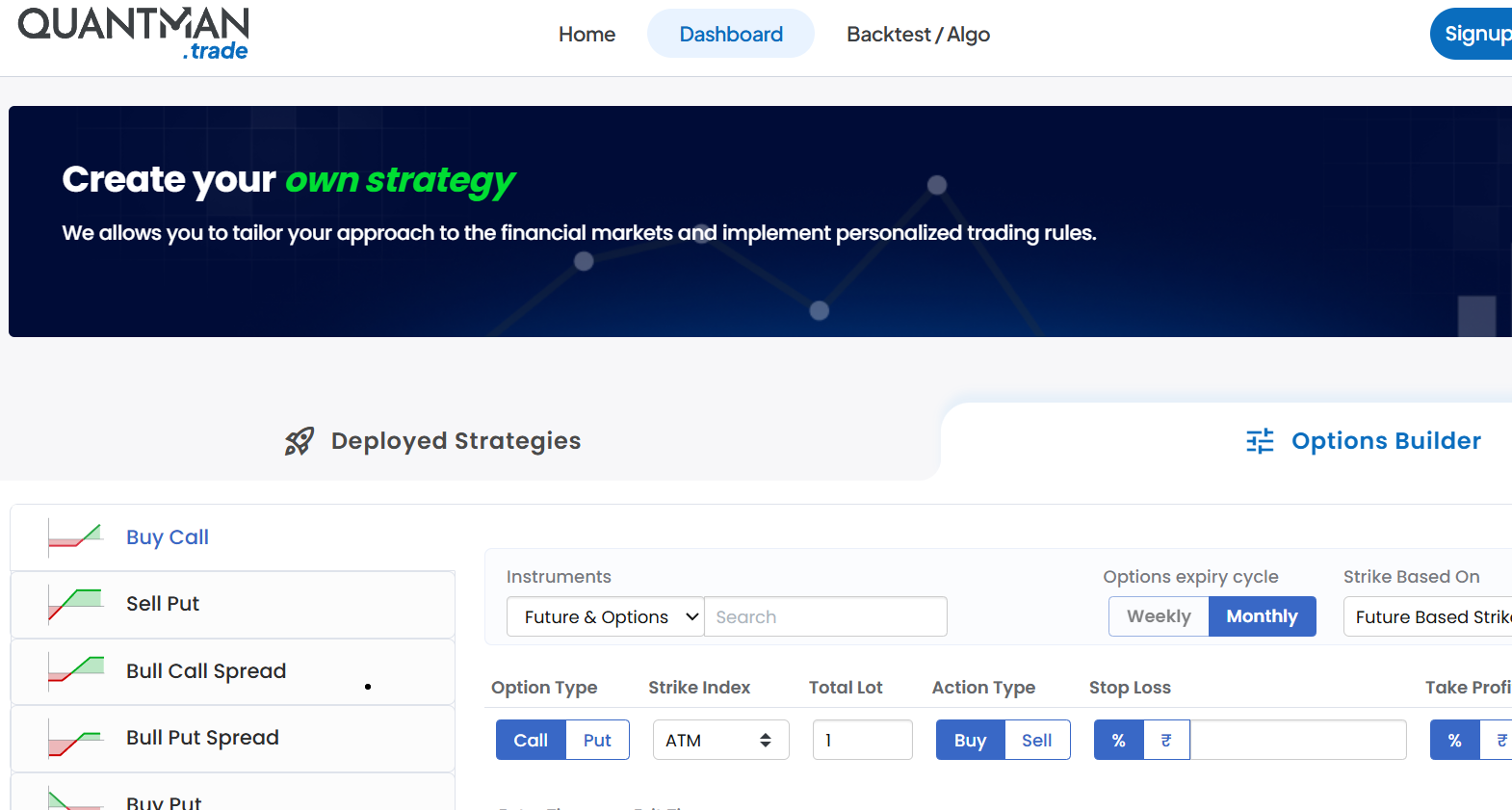
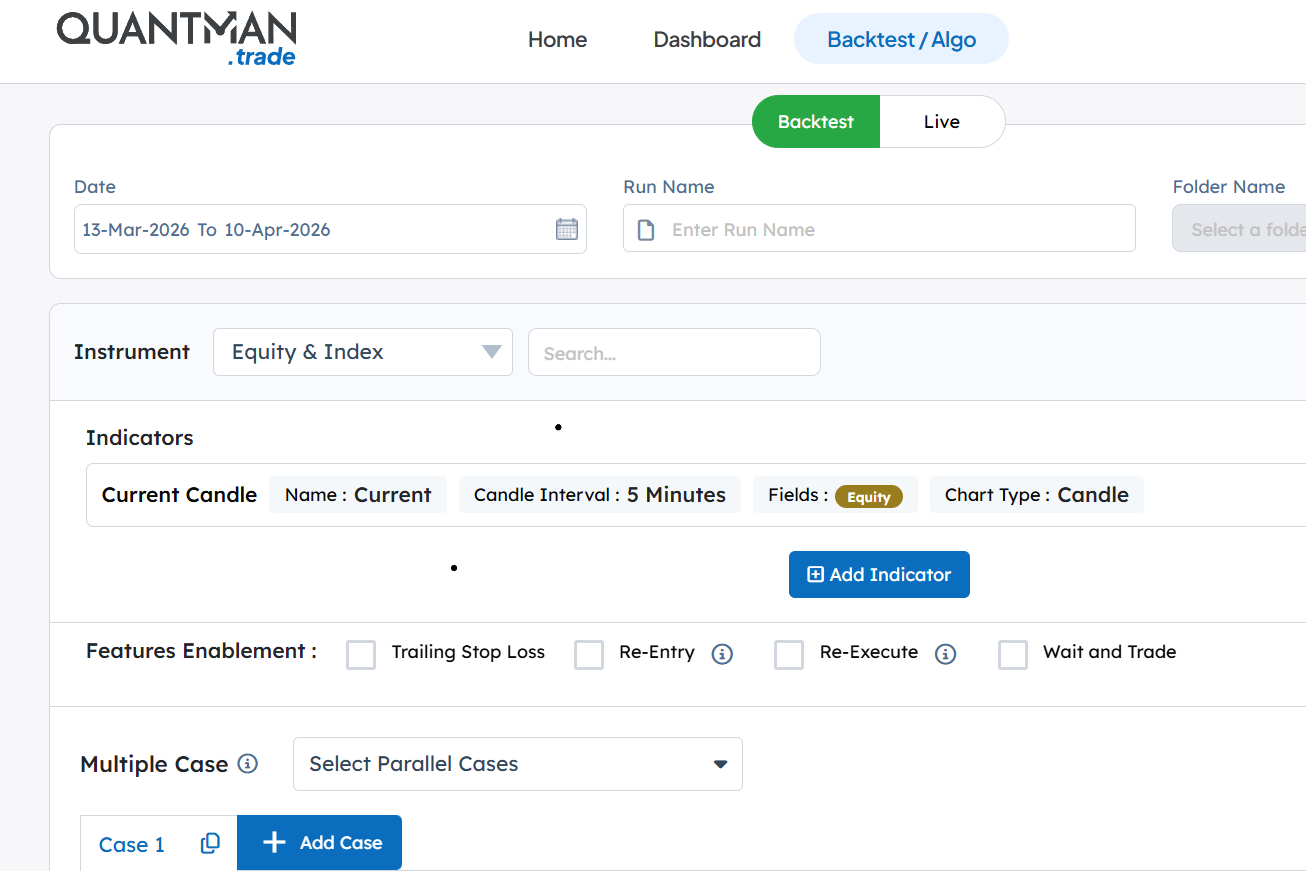
QuantMan is a no-code / low-code algo trading platform that lets retail traders:
- build rule-based strategies
- backtest on historical data
- paper trade
- deploy live using broker APIs
- manage stop-loss, target, and position sizing
- automate F&O and intraday workflows
The platform offers 80+ technical indicators and drag-and-drop strategy logic, which makes it attractive for discretionary traders moving toward automation. (Quantman)
This is especially useful for:
✔ Bank Nifty expiry systems
✔ ORB/breakout systems
✔ VWAP mean reversion
✔ option selling workflows
✔ re-entry and time-based exits
Why SEBI’s New Retail Algo Rules Matter
Learn Quant TradingThis is the biggest tailwind for QuantMan.
SEBI’s framework now requires:
- broker-routed API execution
- order tagging with unique algo IDs
- broker risk controls and kill switches
- exchange-approved vendors for shared strategies
- clear white-box vs black-box classification (Securities and Exchange Board of India)
This dramatically reduces the long-term viability of unofficial browser bots and random webhook tools.
For compliant platforms, this is bullish.
My take
This regulation helps serious players like QuantMan because:
compliance is now becoming a moat
Platforms already integrated with broker APIs are likely to survive and gain share.
️ QuantMan’s Core Strengths
1) Strong strategy builder
This is QuantMan’s biggest edge.
You can combine:
- indicators
- time filters
- candle logic
- multi-condition entries
- stop loss and trailing exits
- options leg logic
without needing Python.
For retail traders transitioning from manual TradingView alerts, this is ideal.
2) Backtesting workflow
The platform’s backtesting stack is clean and useful.
A good workflow looks like:
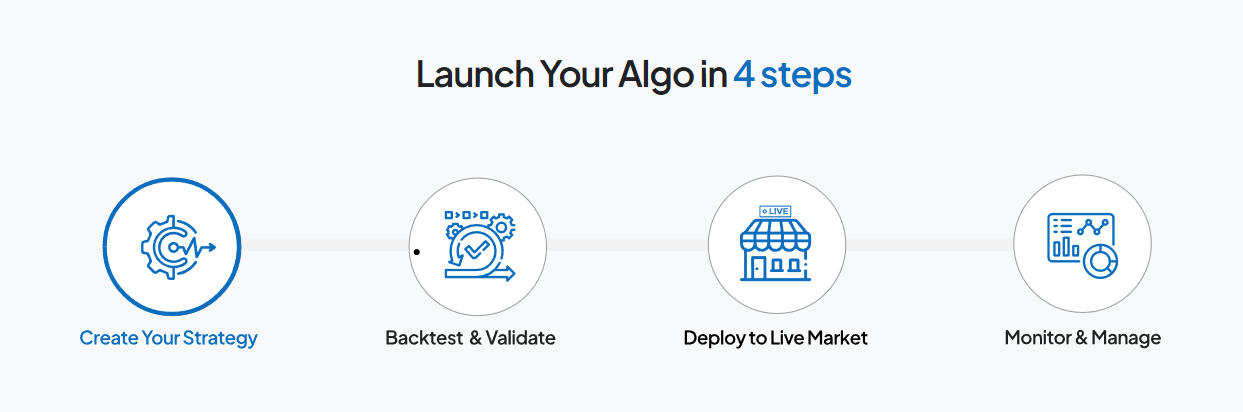
idea → backtest → paper trade → forward test → live deploy
This removes discretionary slippage from execution.
3) Broker deployment
Live deployment through broker APIs is increasingly important after SEBI’s framework.
This gives QuantMan a structural advantage over ad-hoc automation tools.
⚔️ Competitor Comparison: QuantMan vs Others
The real comparison is broader than just Tradetron.
1) AlgoTest — Best for options traders
This is probably the strongest competitor in 2026.
Best for:
- multi-leg options
- iron condors
- Greeks-aware research
- realistic slippage testing
- portfolio analytics
Better than QuantMan when
✔ options research is primary
✔ portfolio-level backtests matter
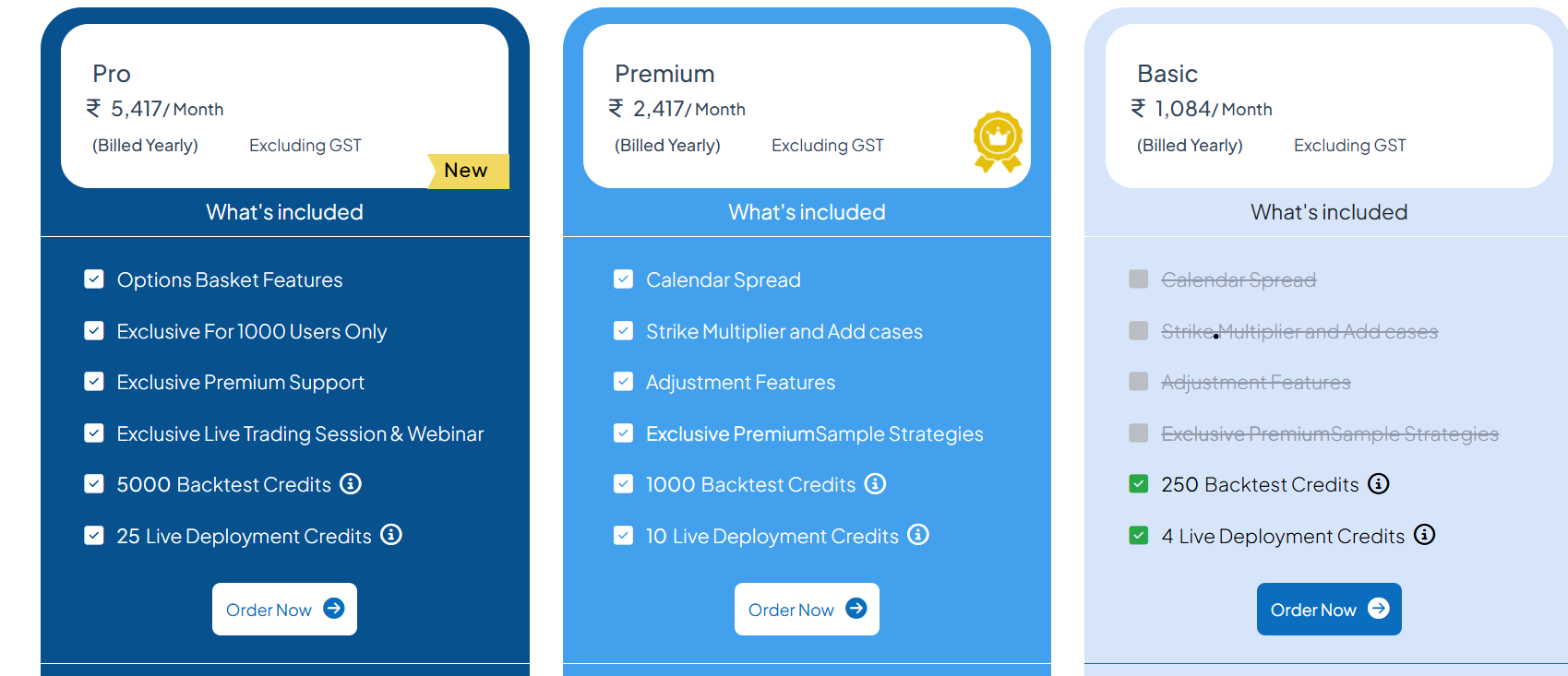
2) Tradetron — Best for marketplace + community
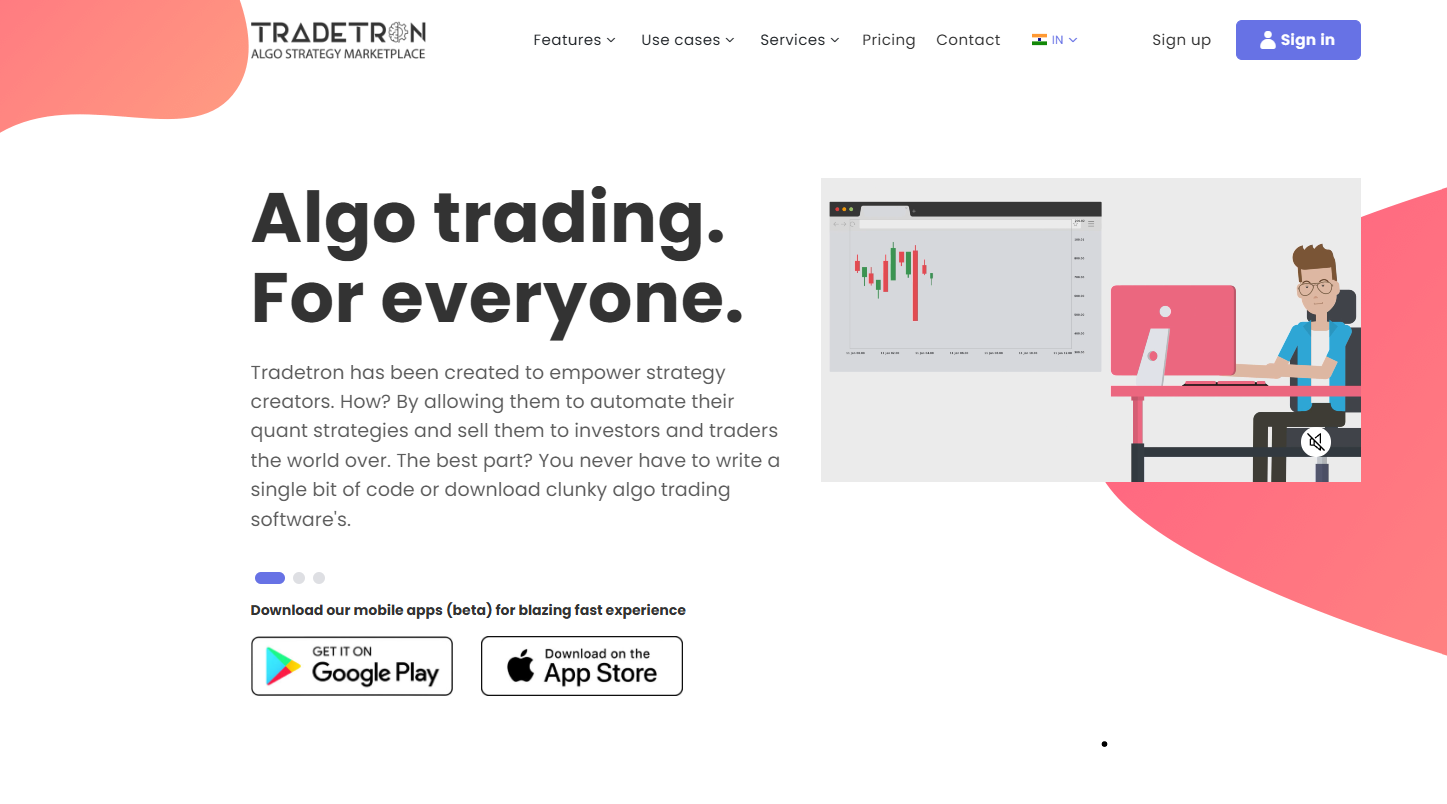
Tradetron remains the biggest community and marketplace moat.
Its key strengths:
- cloud workflows
- copy deployment
- strategy marketplace
- monetization for creators
- large user base
Better than QuantMan when
✔ social/community matters
✔ you want prebuilt algos
✔ you want subscriber monetization
3) Streak — Best beginner platform
Streak still wins for:
- simplicity
- Zerodha integration
- easy indicator workflows
- first-time algo users
Better than QuantMan when
✔ first algo platform
✔ simple equity/futures systems
⚙️ 4) AlgoBulls — Advanced API workflows
Stronger for:
- custom quant traders
- API-heavy workflows
- advanced execution stacks
But steeper learning curve.
⚠️ Biggest Risks of Algo Platforms and Algo Trading
This section matters more than features.
Because:
Most traders fail because of process risk, not software choice.
1️⃣ Overfitted backtests
This is the biggest retail trap.
A strategy that shows:
- 90% win rate
- smooth CAGR
- low drawdown
may completely fail live.
Why?
- expiry-specific tuning
- too many conditions
- curve fitting
- no out-of-sample testing
This is where many traders confuse data mining with edge.
2️⃣ Slippage and liquidity risk
Backtests assume clean fills.
Live trading has:
❌ bid-ask spread
❌ fast gamma shifts
❌ partial hedge fills
❌ option chain illiquidity
❌ spread widening
This especially hurts:
- short straddles
- expiry scalps
- delta-neutral intraday systems
A profitable backtest can die due to live slippage.
3️⃣ Broker / API downtime
This is the most dangerous practical issue.
Even the best algo platform cannot fully protect against:
- broker API failure
- RMS rejection
- stale LTP
- margin recalculation lag
- websocket disconnects
This matters most on:
RBI policy days
expiry spikes
budget sessions
gap openings
A bad hedge fill can destroy months of gains.
4️⃣ Regulatory risk
SEBI’s framework improves safety, but also creates vendor risk.
If a platform fails to stay:
- broker empanelled
- exchange aligned
- properly tagged
Some workflows may stop being viable.
So compliance longevity matters.
5️⃣ The biggest myth: automation = profits
This is the harsh truth.
Automation removes:
✔ hesitation
✔ revenge trading
✔ missed SL
But it does not fix bad strategy design.
A bad trader with a bad strategy simply loses money more consistently.
This is why platform choice is secondary to:
- edge robustness
- position sizing
- regime awareness
- slippage realism
Who Should Use QuantMan?
QuantMan is best for:
✅ DIY serious traders
Traders who want rule precision and deployment discipline.
✅ Semi-systematic discretionary traders
Especially those moving from TradingView alerts to automated execution.
✅ Intraday F&O traders
Good for:
- ORB
- VWAP
- breakout systems
- expiry structures
⭐ Final Verdict: Is QuantMan Worth It?
Yes — QuantMan is one of the best serious retail algo trading platforms in India in 2026.
Its strongest advantage is:
clean strategy building + broker-aligned deployment in a SEBI-compliant world
Best things
✔ strong builder
✔ backtesting workflow
✔ strong for DIY traders
✔ benefits from SEBI compliance trend
Biggest drawbacks
❌ smaller community than Tradetron
❌ weaker options research than AlgoTest
❌ still vulnerable to broker/API failures
My rating
7.5/10
For RandomDimes readers, the real takeaway is:
the edge is not the platform — it is robust strategy design under realistic slippage and risk controls.
QuantMan simply gives serious traders a good execution layer for that edge. Quantinsti is one place where you can learn quant trading!
