
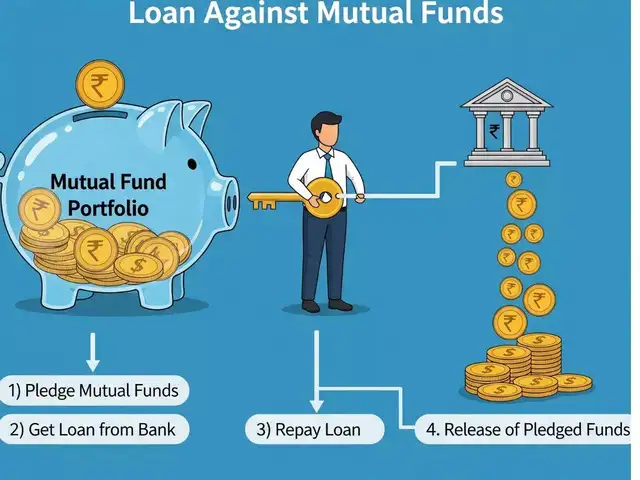
This type of loan is widely used by professional investors, traders, and business owners to maintain liquidity while preserving long-term investment compounding.
In this comprehensive guide, we cover:
-
How a loan against mutual funds works (step-by-step process)
-
Loan-to-Value (LTV) explained with examples
-
Collateral, lien creation, and registrar role (CAMS, KFintech, NSDL, CDSL)
-
Margin calls, collateral monitoring, and liquidation risk
-
Detailed review of VoltMoney, Zerodha Capital, Groww, AbhiLoans, Yenmo, Mirae, and Dhan
-
Comparison vs home loan, loan against property, and Margin Trading Facility (MTF)
-
Which loan type is cheapest and safest
Interest Rate Comparison: All Major Loan Types in India

Understanding loan costs across categories helps determine when LAMF makes sense.
| Loan Type | Interest Rate | Collateral | Risk | Best Use |
|---|---|---|---|---|
| Home loan | 7.5% – 9% | Property | Lowest | Buying property |
| Loan against mutual funds | 8% – 12% | Mutual funds | Low | Investor liquidity |
| Loan against property | 9% – 14% | Property | Low | Large liquidity |
| Loan against shares | 10% – 14% | Stocks | Medium | Trading liquidity |
| Gold loan | 7% – 15% | Gold | Medium | Emergency liquidity |
| Margin Trading Facility | 12% – 18% | Stocks | High | Leveraged trading |
| Personal loan | 12% – 20% | None | High | Consumption |
| Credit card loan | 24% – 36% | None | Very high | Emergency only |
Key takeaway:
-
Home loans are cheapest overall
-
Loan against mutual funds is the cheapest liquidity loan
-
Personal and credit card loans are most expensive
What is a Loan Against Mutual Funds?
A loan against mutual funds is a secured loan where your mutual fund units are pledged as collateral in exchange for a credit line or loan.
You still retain ownership of mutual funds. They continue generating returns.
Example:
-
Mutual fund portfolio value: ₹10 lakh
-
Allowed LTV: 60%
-
Loan eligibility: ₹6 lakh
You pledge mutual funds and receive a ₹6 lakh credit line.
Understanding Loan-to-Value (LTV)
Loan-to-Value determines maximum borrowing allowed.
Formula:
LTV = Loan Amount ÷ Mutual Fund Value
Example:
Loan = ₹6 lakh
Collateral value = ₹10 lakh
LTV = 60%
Higher LTV means higher risk of margin calls.
Typical LTV by Mutual Fund Type
| Fund Type | Typical LTV |
|---|---|
| Debt mutual funds | 70% – 90% |
| Hybrid mutual funds | 60% – 75% |
| Equity mutual funds | 50% – 65% |
Debt funds have higher LTV because of lower volatility.
Equity funds have lower LTV due to market risk.
How Collateral Pledge Works (CAMS, KFintech, NSDL, CDSL)

-
Investor
-
Platform (VoltMoney, Zerodha, Groww, etc.)
-
Lender (Bank or NBFC)
-
Registrar or Depository
Registrars manage ownership records.
Key registrars:
-
CAMS (Computer Age Management Services)
-
KFintech
-
NSDL and CDSL (for demat mutual funds)
Step-by-Step Process: Loan Against Mutual Funds
Step 1: Fetch mutual fund holdings
Investor logs in using PAN and OTP.
The platform retrieves holdings from the registrar.
Time required: instant.
Step 2: Loan eligibility calculation
Loan limit calculated using LTV.
Example:
Portfolio value: ₹10 lakh
Eligible loan: ₹6 lakh
Step 3: Loan approval
Lender performs:
-
KYC verification
-
Risk assessment
-
Collateral validation
Approval time:
-
Fintech platforms: 5 minutes to few hours
-
Banks: 1–2 days
Step 4: Lien creation (pledge)
A lien is created electronically.
The investor still owns mutual funds.
But mutual funds cannot be sold until the loan is repaid.
Step 5: Credit line activation
The loan becomes available as an overdraft credit line.
Step 6: Withdraw funds
The investor withdraws any amount within the limit.
Interest is charged only on the used amount.
Overdraft Structure: Major Advantage
Example:
Approved limit: ₹6 lakh
Withdrawn amount: ₹2 lakh
Interest charged only on ₹2 lakh.
This makes borrowing cost-efficient.
Margin Call Risk Explained

Collateral value fluctuates with the market.
Example:
Initial collateral: ₹10 lakh
Loan: ₹6 lakh
LTV: 60%
Market falls:
Collateral: ₹7 lakh
New LTV: 86%
Margin call triggered.
Investor must:
-
Repay part of the loan
OR -
Add more collateral
Liquidation Risk
If the margin call is ignored, the lender may liquidate mutual funds.
To reduce risk:
Use a conservative LTV of 40–50%.
Loan Against Mutual Funds vs Margin Trading Facility (MTF)
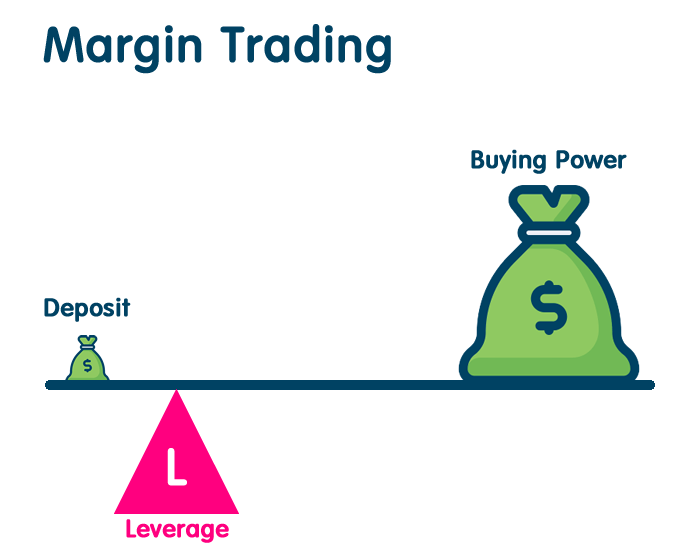
Example:
Capital: ₹5 lakh
Borrowed: ₹5 lakh
Total exposure: ₹10 lakh
If the stock falls 30%:
Value: ₹7 lakh
Loan: ₹5 lakh
Loss: ₹3 lakh (60%)
Leverage amplifies losses.
LAMF is safer because it is used for liquidity, not leverage.
Best Loan Against Mutual Funds Platforms in India (Detailed Review)
VoltMoney — Best Overall Platform

VoltMoney is India’s leading LAMF fintech infrastructure platform. In-depth article on Voltmoney
Lending partners
VoltMoney connects borrowers with banks and NBFCs such as Tata Capital.
Interest rate
9%–11% typical range.
Structure
Overdraft credit line.
Interest is charged only on the used amount.
Platform infrastructure
Supports 8000+ mutual funds across CAMS and KFintech.
Advantages
-
Fastest approval (minutes)
-
Lowest rates
-
No prepayment penalty
-
Fully digital
Best for
Most investors.
If you are looking to become a loan distributor, you can register below
2. Zerodha Capital — Best for Traders
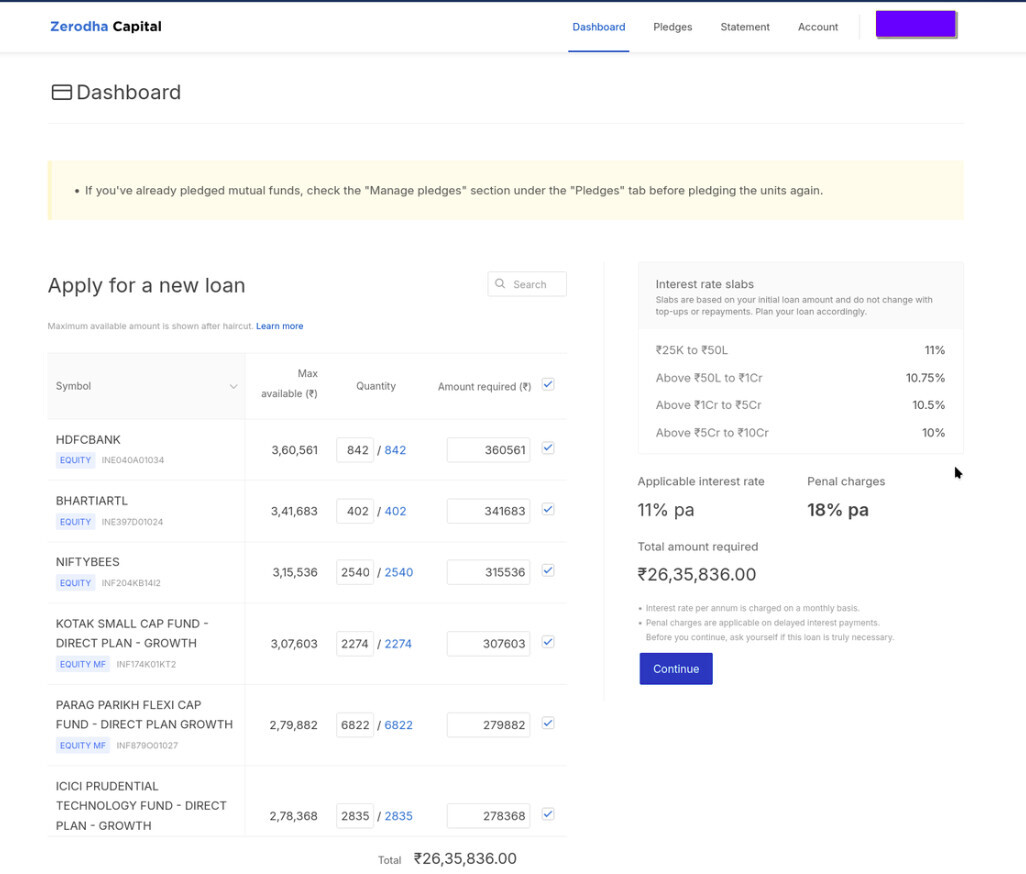
Zerodha Capital provides loans against mutual funds and stocks through Incred Finance.
Interest rate
10%–11% typical range.
Maximum loan
Up to ₹10 crore.
Process
-
Select securities
-
Digitally pledge
-
Approval within 24 hours
-
Cash credited to the bank account
LTV
Typically around 45–60%, depending on fund type.
Advantages
-
Best for Zerodha users
-
Supports stocks and mutual funds
3. Groww Credit — Best for Groww Users
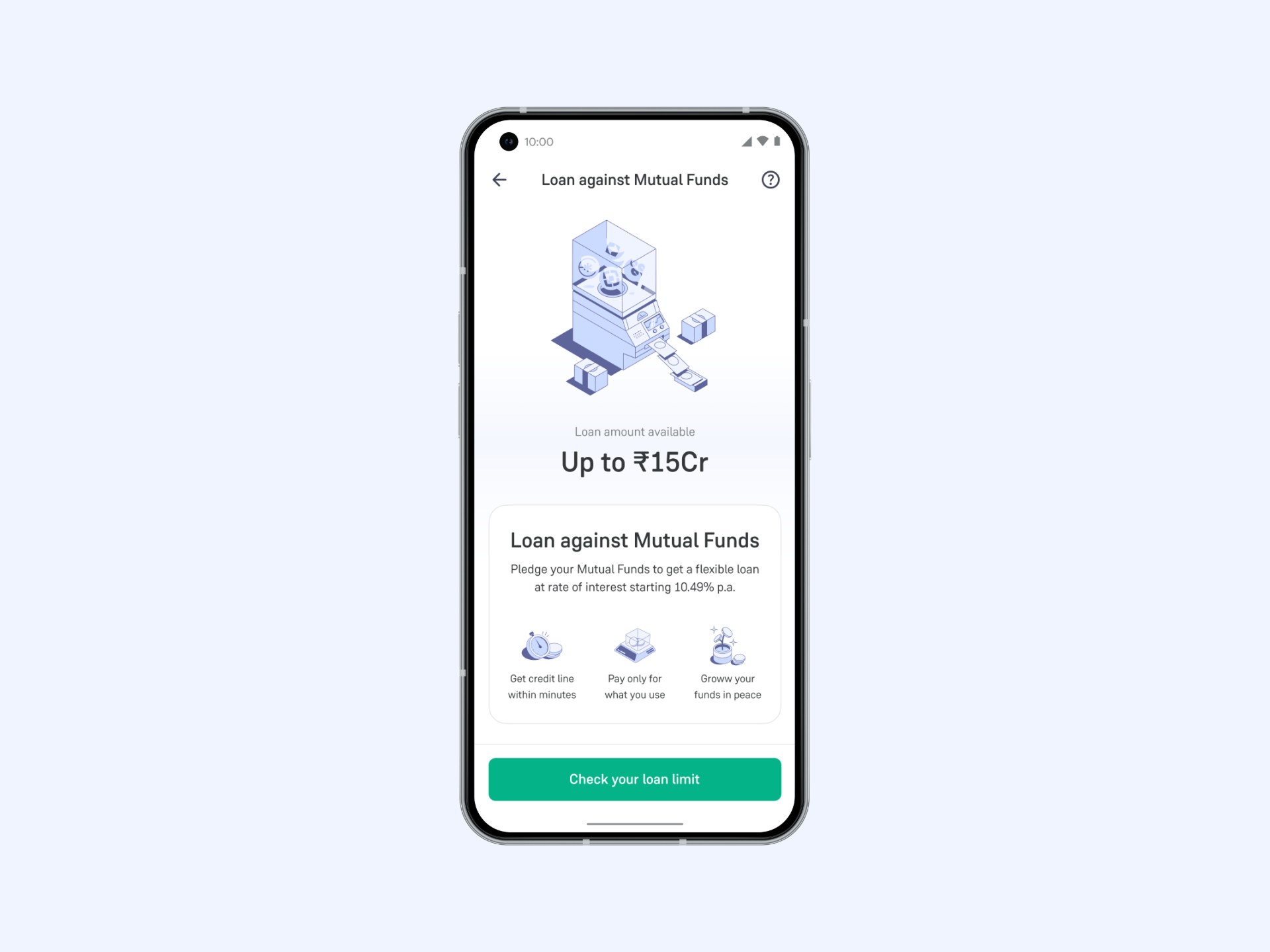
Groww Credit provides an integrated LAMF facility.
Maximum credit line
Up to ₹15 crore depending on portfolio.
Advantages
-
Seamless Groww integration
-
Continue earning mutual fund returns
4. AbhiLoans — Lowest Interest NBFC
Interest rates start from ~11%.
Direct NBFC lender KNAB Finance
Advantages:
- Direct lending infrastructure
5. Yenmo — Flexible Platform
Interest rate around 10.49%. Partner is Bajaj Finance
Advantages:
-
Flexible repayment
-
No penalties
6. Mirae Asset Financial Services
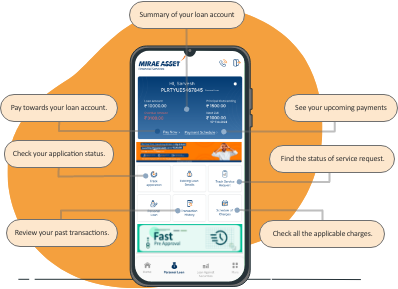
Features:
-
Digital approval
-
Reliable NBFC
7. Dhan (DhanLAP)
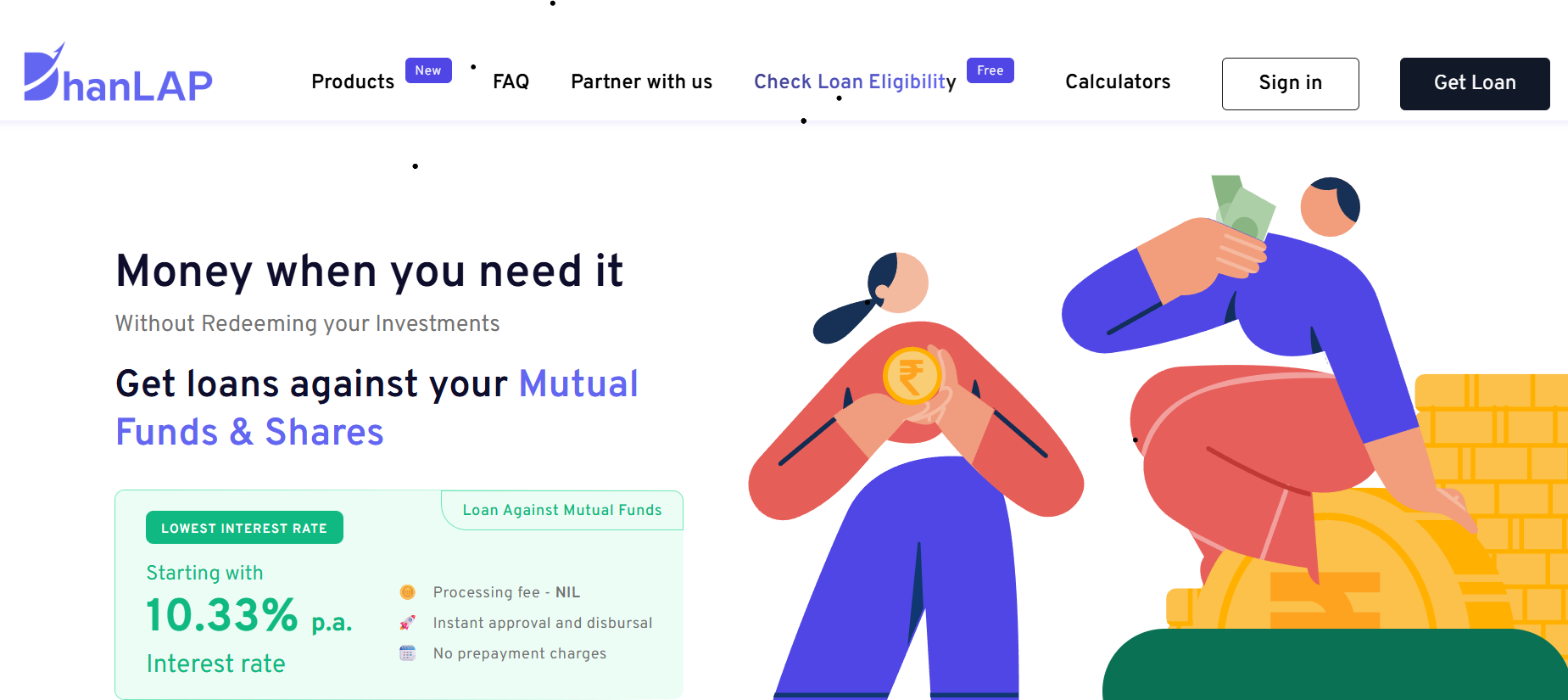
Interest rate starting from ~10%.
Fully digital application process.
Multiple lending NBFCs onboarded, such as Bajaj, Sriram Credit
Platform Comparison Summary
| Platform | Interest | Best For |
|---|---|---|
| VoltMoney | 9–11% | Best overall (Speed+competitive Rate) |
| Zerodha Capital | 10–11% | Traders |
| Groww Credit | 10–12% | Groww users |
| AbhiLoans | 11-12% | Multiple Partners |
| Yenmo | 10–12% | Flexible repayment |
| Mirae Asset | ~10.25% | Trusted NBFC, Best for MTF |
| Dhan | ~10% | Dhan users |
Loan Against Mutual Funds vs Home Loan

But LAMF is better for liquidity.
| Feature | Home Loan | Loan Against MF |
|---|---|---|
| Interest | Lower | Slightly higher |
| Approval time | Weeks | Hours |
| Flexibility | Low | High |
Example: Real Cost Comparison
Borrow ₹10 lakh for 1 year.
| Loan Type | Interest Cost |
|---|---|
| Home loan | ₹80,000 |
| Loan against MF | ₹1,00,000 |
| Personal loan | ₹1,50,000 |
| Credit card loan | ₹3,60,000 |
LAMF saves high cost vs unsecured loans.
Professional Investor Strategy
Professional investors use LAMF to:
-
Avoid selling investments
-
Maintain compounding
-
Access liquidity efficiently
Safe LTV used: 40%–50%
This reduces margin call risk.
Final Ranking: Cheapest Loan Types in India
From cheapest to most expensive:
-
Home loan
-
Loan against mutual funds
-
Loan against property
-
Loan against shares
-
Margin Trading Facility
-
Personal loan
-
Credit card loan
Final Verdict
Loan against mutual funds is one of the best liquidity tools available for Indian investors.
It offers:
-
Low interest rates
-
Fast approval
-
Flexible overdraft structure
-
Lower risk compared to MTF
-
No need to sell investments
Platforms like VoltMoney and Zerodha Capital make the process fast, efficient, and investor-friendly.
For investors needing liquidity while preserving investments, this is one of the most efficient financing options available today.
